
Last Updated on September 23, 2021 by Ale

If you’re looking to spend one day in Death Valley, I’ve got you covered!
This stunning national park is known for being the land of extremes – from hottest temperatures to lowest elevations, it is absolutely worth visiting.
While it’s easy to spend a full week exploring Death Valley, you can 100% see the best of Death Valley in one day.
Whether you’re planning a trip from Las Vegas to Death Valley or national park hopping from nearby Joshua Tree, you’ll find all the tips you need to make the best of your Death Valley day trip below!
This post may contain affiliate links. This means I’ll get a commission (at no extra cost to you!) if you purchase through my link. Please see my Disclosure page for more information.
Basic Info
- Location: Southeastern California, near the Nevada border
- Entrance Fee: $30 per vehicle, valid for 7 days
Visiting multiple parks? Get a National Parks Pass! It allows you to get into all national parks + most lands for one low fee. I buy one every year and it’s absolutely worth it.
How to Spend One Day in Death Valley
When you only have one full day to spend in Death Valley, you need to come prepared with an itinerary and a plan to maximize daylight.
Keep reading to discover the best things to do in Death Valley in one day!

Badwater Basin
If you want to see the best of Death Valley in one day, you absolutely need to stop at Badwater Basin. Located at -282 feet below sea level, Badwater Basin is the lowest point in all of North America!
Plus, Badwater Basin is home to one of the most iconic sights in Death Valley: the white salt flats that pool into polygon-shaped formations.
For the best experience, you’ll want to actually walk down into the salt flats. The path stretches out for about ¼ mile, but you can explore and much or as little as you want. If you’re feeling adventurous, you can even taste the salt!
Tips for Visiting
- Don’t forget to bring plenty of sunscreen, a sunhat, and water – this area is completely exposed to the elements.
- The beginning of the path through Badwater Basin isn’t very exciting to photograph. For photos that pop, you’ll want to go further down the salt flats and away from the crowds.
- This is a popular spot – arrive early for the best shot at snagging a parking spot and to avoid crowds!
Optional: Hike the Natural Bridge Trail after stopping at Badwater Basin!
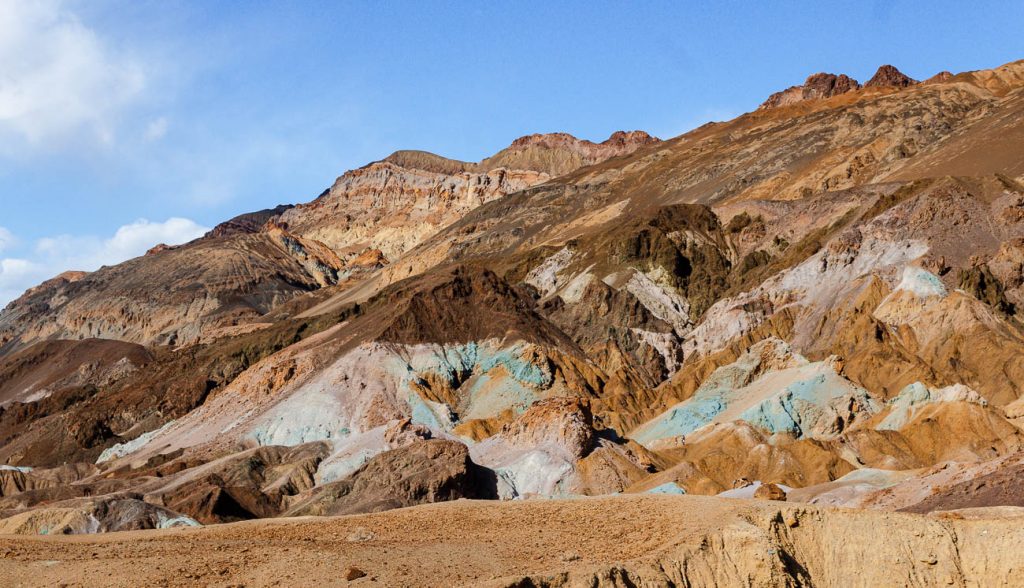
Artists Palette Drive
The Artists Palette is perhaps one of the most picturesque areas of Death Valley, and a must-do when you only have one day in Death Valley!
This 9-mile one-way drive is home to one-of-a-kind, colorful painted mountains, splashed with gorgeous pinks, blues and purples. They stand in sharp contrast to the surrounding desert environment, and make for stunning photographs.
You’ll access the drive off of Badwater Basin Road – there’s signs so you won’t miss it. Once you’re here, you’ll come across your first pullout full with cars (usually).
This is NOT where the colors are! Keep driving, Artists Palette is easy to spot further up the road.
Tips for Visiting
- While you can see Artists Palette right from your car, you can also hike a bit further in to get closer to the colors.
- Be careful when doing this drive. The road winds through a mountain area, there’s many blind curves and corners.
- The fun doesn’t stop once you pass the main attraction. The drive only gets prettier after Artists Palette, keep your eyes open to take in all the sights!
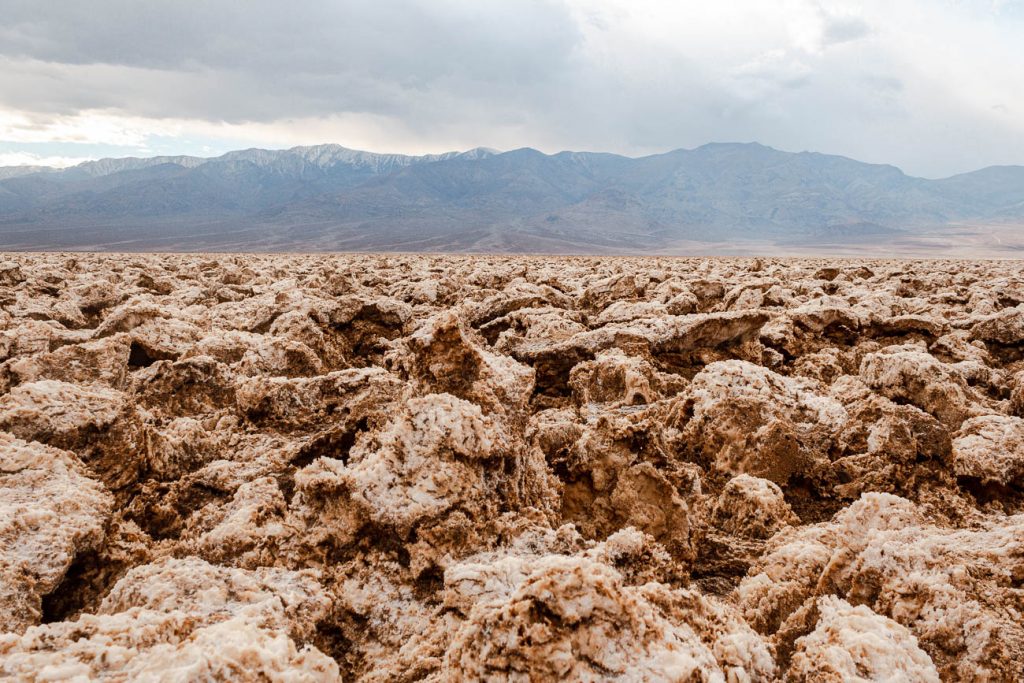
Devils Golf Course
Death Valley is full of out-of-this-world locations, and the Devils Golf Course is one of the strangest ones!
This area is a large salt flat that’s formed into a sharp, rock-like formation. It’s said that “only the devil could play golf” here, thus giving Devil’s Golf Course its name.
To get here, drive back towards Furnace Creek from Badwater Basin. You’ll need to drive down a dirt road (passable to sedans most of the time!)
You can see the salt flats right from your car, with parking available on the side of the flats down the road.
Tips for Visiting
- I don’t recommend walking on the salt flats, but if you do, be VERY careful. The salt has formed into super sharp rock-like formations that can seriously hurt you if you fall. Always travel with a first aid kit!
- Keep a lookout for spherical salt formations – they resemble golf balls!
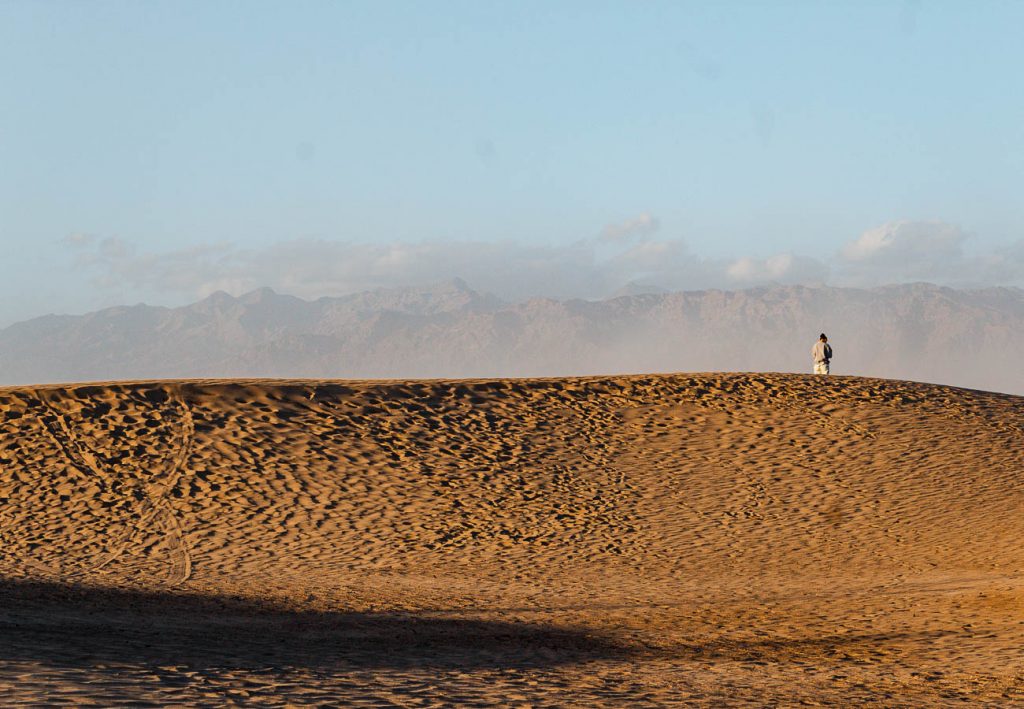
Mesquite Flat Sand Dunes
One of the most iconic sights in Death Valley, the Mesquite Flat Sand Dunes are a must add to your Death Valley itinerary. While they’re not the only dunes in Death Valley, they are the most easily accessed.
Located right near the Stovepipe Wells area, there’s a large parking lot right off Hwy 190 for easy access.
You’ll immediately see the dunes: they’re a gorgeous golden color and gently slope upwards. There are no real defined paths to explore the dunes, you kind of just start walking towards them and turn around when you’d like!
Tips for Visiting
- For Instagram-worthy photos, walk further into the sand dunes, away from the parking lot. The dunes are more dramatic and there’ll be less people around.
- You should know that Death Valley is prone to heavy winds. When this occurs, you may want to avoid the dunes as sand goes flying everywhere (ask me how I know!)
- As always, protect yourself from the sun, wind, and sand. Sunscreen, a light long-sleeved tee, a hiking hat and plenty of water are a must when exploring the sand dunes.
Other Sand Dunes in Death Valley
- Eureka Dunes (requires long dirt road drive to access)
- Ibex Dunes (requires hike to access)
- Panamint Dunes (requires hike and dirt road drive to access)
- Saline Valley Dunes (requires long, rough drive to access)

Zabriskie Point
Zabriskie Point is a great place to see Death Valley’s colorful badlands. These badlands have been shaped and molded by the elements into hills with tons of nooks and crannies.
This area of the park is the most popular place to watch the sunrise. As the sun begins to appear, the badlands come alive in hues of pinks and purples. The views here are truly incredible!
The only downside is that you’ll be sharing them with lots of people. Zabriskie Point is especially popular with photographers, so if you’d like a prime viewing spot you need to get here early!
Tips for Visiting
- Make sure you bring a warm jacket or sweater, the weather in the morning gets really cold!
- If you’d like to explore further, there’s trailheads here for the Badlands Loop/Golden Canyon/Gower Gulch Loop – a 2.7 to 4.3-mile moderately strenuous hike.
- To avoid the crowds, watch the sunrise at Dante’s View and come back to Zabriskie point right after. There won’t be as many people then and the light will still be great for photos.
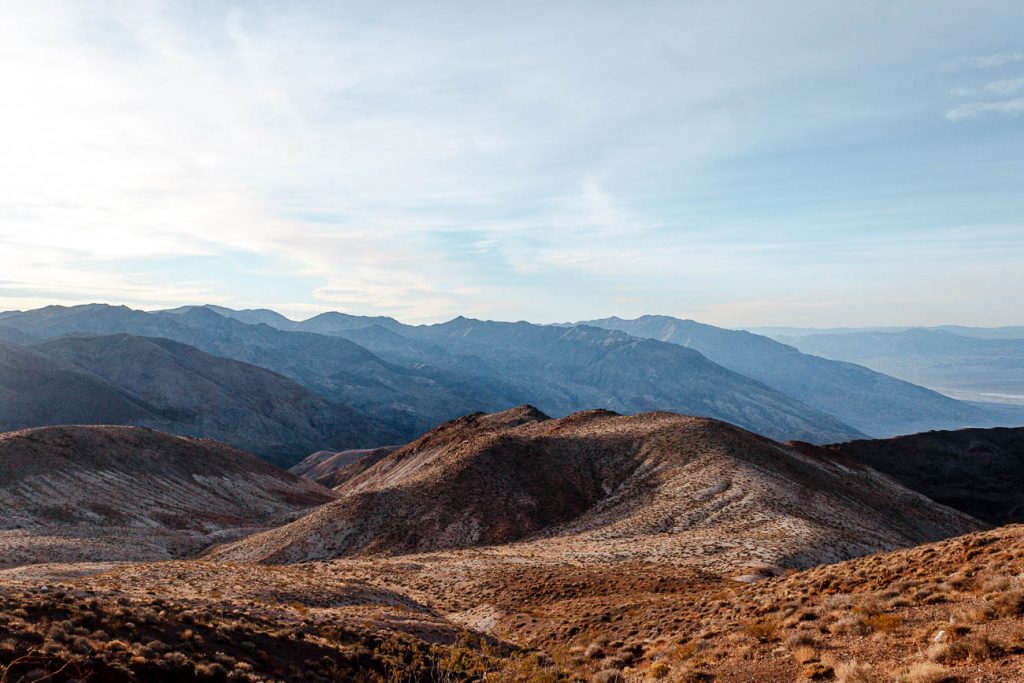
Dantes View
Dantes View does not get enough love, but I’m here to tell you it definitely should. Located in a more remote area of the park, Dantes View gives you a sweeping look at the Death Valley landscape.
Up at 5,500 feet in the air, you’ll get views of Badwater Basin (-282 feet below sea level!) and of the mountain range beyond it. The drive here, while 30 minutes long, is super pretty and worth it.
We came to Dantes View after watching the sunrise at Zabriskie Point and the parking lot was deserted. While Zabriskie Point is beautiful, honestly, I wish we’d seen the sunrise at Dantes View instead to avoid some of the crowds.
Tips for Visiting
- The drive to Dante’s View winds up a mountain, and is not suited for all vehicles.
- Because you’re so high up, the weather here can get much colder (and windier!) than the rest of the park. Pack a sweater!
- There’s a hiking trail that gets you to an even higher view of the valley. Look for signs pointing the way.
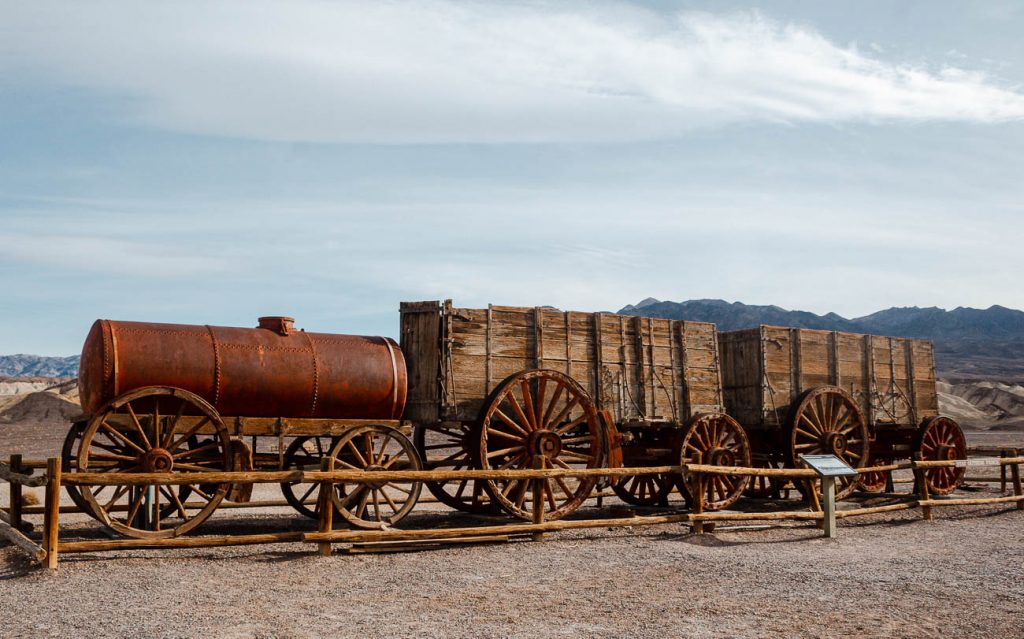
Harmony Borax Works
Step back in time and learn about the history of borax mining in Death Valley at the short Harmony Borax Works trail!
Located on Highway 190 near the Furnace Creek Visitor Center, stopping at Harmony BoraxWorks is a great way to see a different side of Death Valley.
With history dating back to the 1800’s, this is a quick stop to see preserved ruins. Plus, this is also a good place to stargaze if you end up spending the night!
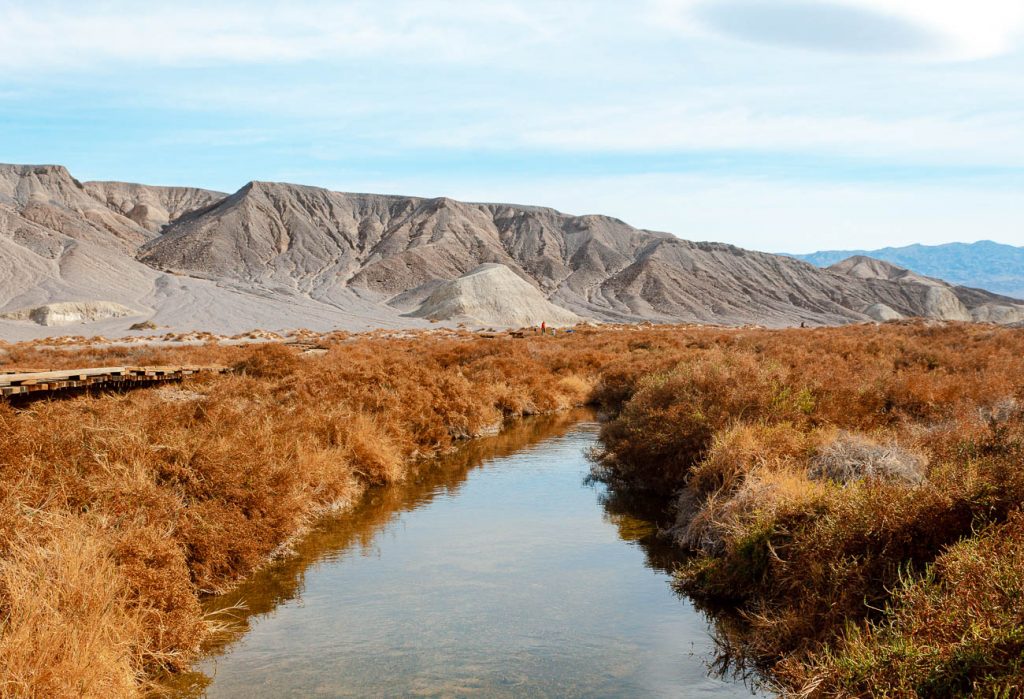
Salt Creek Interpretative Trail
The Salt Creek trail is a hidden gem in Death Valley. This short, 0.5-mile little loop takes you on a wooden boardwalk through a creek in Death Valley – how cool is that?
Walking this trail reminded me of walking along the beach. It’s super pretty, and if you’re here at the right time you can even spot some pupfish!
To get here, you’ll need to drive down a (short) dirt road (passable to sedans most of the time) until you reach a parking lot.
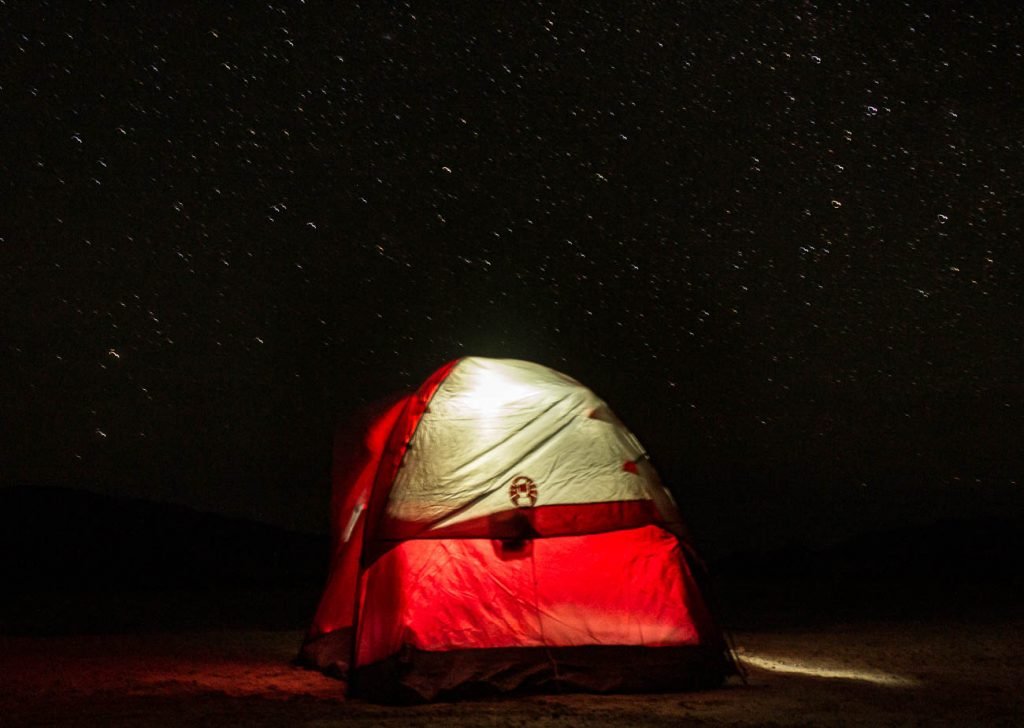
Stargazing
Death Valley has some of the darkest night skies in North America, making the stargazing here top-notch.
It is definitely worth it to spend the night in Death Valley for the stargazing alone. You’ll get a sky full of stars with views of the Milky Way even when the moon is out. We even saw shooting stars while we were here!
Where to Stargaze
- Directly from your campsite – but put out your fire first!
- Harmony Borax Works
- Mesquite Sand Dunes
- Dantes View
- Father Crowley Vista Point
- anywhere else you can safely look up at the sky!
Tips for Stargazing
- Consider investing in a red-light capable flashlight or headlamp so you don’t spoil your night vision.
- Plan to be out at least 30 minutes: that’s how long it takes your eyes to adjust to the darkness.
- Bring a thermos of your favorite hot drink to share. We love a hydroflask! It does double duty as a thermos in the cold-, and an insulating water bottle in the heat.
Quick Death Valley One Day Itinerary + Map
The following itinerary assumes you arrive in Death Valley one day and leave the next. Of course, you can always modify it to fit your travel plans!
Day 1
- Arrive in the park and get your map at the Furnace Creek visitor center.
- Drive to Badwater Basin (~18 miles from Furnace Creek)
- Leave Badwater Basin and do Artists Palette Drive
- Finish Artists Palette Drive and double back towards Devils Golf Course
- Head back towards Furnace Creek and stop at Harmony Borax Works followed by the Salt Creek Trail.
- After Salt Creek, head over to the Mesquite Sand Dunes for the sunset and/or stargazing.
Day 2
- Wake up early and watch the sunrise at Zabriskie Point or Dantes View
- If you spent the sunrise at Zabriskie, head over to Dantes View. If you watched it from Dantes View, finish at Zabriskie Point.
- Do a hike or head immediately home!
Map
What to Do if You Have More Time
If you have 2 days in Death Valley (or more!) check out some of the other things to do in the park.
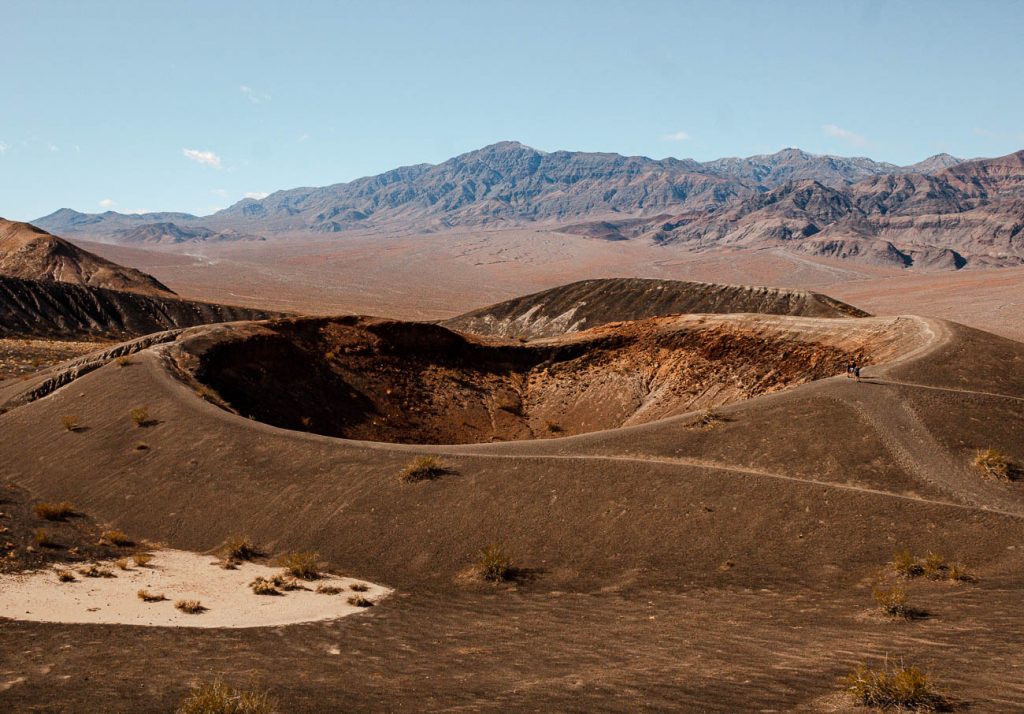
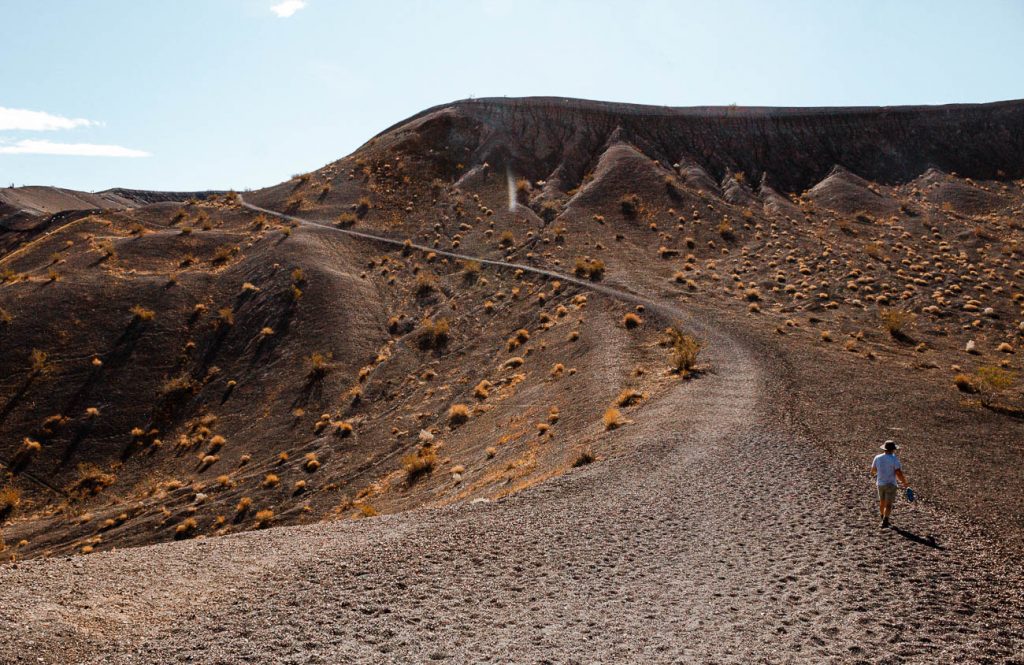
- Ubehebe Crater: a large volcanic crater located in one of the more “remote” areas of the park. The views are incredible, and a 1.5 mile hike will take you around the rim. Note, this is moderately difficult hike – you’re basically walking on loose gravel the whole time!
- Hike to Natural Bridge: 1/3-mile (one-way) easy hike will take you to a natural bridge that connects canyon walls. This is a super popular, family-friendly hike so the parking lot can fill up.
- Badlands Loop: a 2.7 mile moderately difficult hike that will take you through the badlands that make up the Zabriskie Point area. You start this loop from the Zabriskie parking lot, making it the perfect add on after watching the sunrise.
- Darwin Falls: a waterfall in the desolate landscape of Death Valley, how cool is that? This is a 2-mile (out and back) hike that will take you to a waterfall oasis (no swimming though!). Definitely out of the way, and you have to drive down a dirt road to get here, but a must if you have the time.
Where to Stay in Death Valley
While it’s possible to make a day trip to Death Valley from Las Vegas, for the best experience you’ll want to spend at least one night in the park.
Death Valley is really isolated and far from most towns, but there’s some hotels and camping options to stay directly in the park itself.
Campgrounds in Death Valley
The National Park Service runs nine campgrounds in the park, with fees ranging from $0 to $36 / night.
The most popular campground is Furnace Creek – it’s central to most popular attractions in the park. If visiting between mid-October to mid-April, you should make reservations in advance.
List of Death Valley Campgrounds
- Furnace Creek: $22 / night or $36 / night for RV hookups.
- Sunset: $14 / night. Open mid-October to mid-April.
- Texas Spring: $16 / night. Open mid-October to mid-April.
- Stovepipe Wells: $14 / night. Open mid-September to mid-May.
- Mesquite Spring: $14 / night. Open year-round.
- Emigrant: FREE. Open year-round, tents only.
- Wildrose: FREE. Open year-round depending on weather.
- Mahogany Flat: FREE. Closes in the winter months. High clearance vehicle recommended.
- Thorndike: FREE. Closes in the winter months. High clearance vehicle recommended.
Private campgrounds include Fiddler’s Camp, Stovepipe Wells RV Park, and Panamint Springs.
Hotels in Death Valley
- The Inn at Death Valley
- The Ranch at Death Valley
- Death Valley Lodging Company
- Panamint Springs Resorts
What to Pack for a 1 Day Death Valley Trip
Death Valley is a harsh desert landscape, so you’ll want to make sure you come prepared. Below is a list of things you should plan to bring with you to Death Valley to make your trip enjoyable!
- Hiking Hat: there’s no shade in Death Valley so create your own! This is the hiking hat I use, it’s super affordable!
- Sunscreen: you will go through so much sunscreen while visiting Death Valley. I LOVE this sunscreen – it’s lightweight and smells like coconuts!
- Reusable Water Bottle: it’s the desert, you need water. This 32oz version is a classic, but this other one will keep your water icy cold (perfect for those hot days!)
- Wilderness Wipes: these are perfect when you feel gross after a day out in the heat but don’t have immediate access to a shower. They got us through our long Utah national parks road trip!
- Camera: to take all the pictures, obviously! I have this camera and love it.
- Portable charger: did I mention Death Valley is desolate? You need this portable charger, especially if you’re camping.
- Large water jug for your car: in case you get stranded, it’s good to have plenty of water (especially in the summer months). Every time I go to the desert I keep one of these in my car.
- Jumper cables, spare tire, general car things: you need to come prepared in case your vehicle breaks down since help is usually far away.
Other Things to Know + Tips for Visiting

What’s the Best Time to Visit Death Valley?
The best time to visit Death Valley is between November to March. During the winter / spring season, the weather in the park is much more pleasant. The average temperature (high) in November is 77°F compared to over 100°F in the summer months!
Death Valley in the Summer
We don’t recommend visiting Death Valley in the summer, but if you must, you need to come prepared for extreme temperatures. The average high in the park in July is 116°F. Hiking in this weather is dangerous and it’s not recommended that you head out after 10am!
Final Tips for Visiting Death Valley
- There’s no cell service in the park. Download an offline map of the park ahead of time.
- Don’t underestimate the weather. Even if you’re visiting in winter, the sun exposure in Death Valley is extreme. You need to have water, sunblock and a hiking hat, period.
- Things are further away than they seem. Death Valley is a huge park! While it might be tempting to hike Ubehebe Crater and then double back to Badwater Basin, for example, you’d be driving for a long time (ask me how I know!) With one day in Death Valley, stick to the main attractions
- Fill you gas tank often. Again, you’ll be driving a lot – the last thing you want is to run out of gas in the middle of nowhere!
- Death Valley gets a ton of wind. Dust storms are common, and the winds blow hard here. If you’re camping, make sure you’re prepared to stake down your tent (or even sleep in the car).
Explore More National Parks & Beyond
- Explore the out-of-this-world Joshua Trees at Joshua Tree National Park in nearby Southern California
- Embark on an epic Utah Mighty 5 Road Trip and Explore Zion, Arches, Bryce Canyon, Capitol Reef and Canyonlands National Parks!
- Planning an extended trip to California? Get a FREE California packing list printable and packing guide!
- For more desert fun, jump over to Arizona and see the best of Saguaro National Park
Save This for Later!
